Trinity Bible College Makes State History with First Ph.D. Graduates
Trinity Bible College and Graduate School, founded in 1948, has experienced the favor of the Lord for decades. In recent years, the school has seen several successful campus development projects, numerical growth, and expansions in degree and programmatic offerings.
In 2023, the college marked its 75th anniversary with a Diamond Anniversary celebration on the Ellendale, North Dakota, campus, a time of reflection and thanksgiving for the faithfulness of the Lord.
This year, Trinity celebrated yet another milestone with the graduation of its first Ph.D. candidates.
Under the leadership of Trinity President Paul Alexander for the past 13 years, the college’s programs have continued to expand, including the opening of Trinity’s graduate school, overseen by Alexander’s wife, Carol.
Trinity offers two doctoral degrees – a Doctorate of Contextual Leadership degree and now, a Ph.D. in Practical Theology.
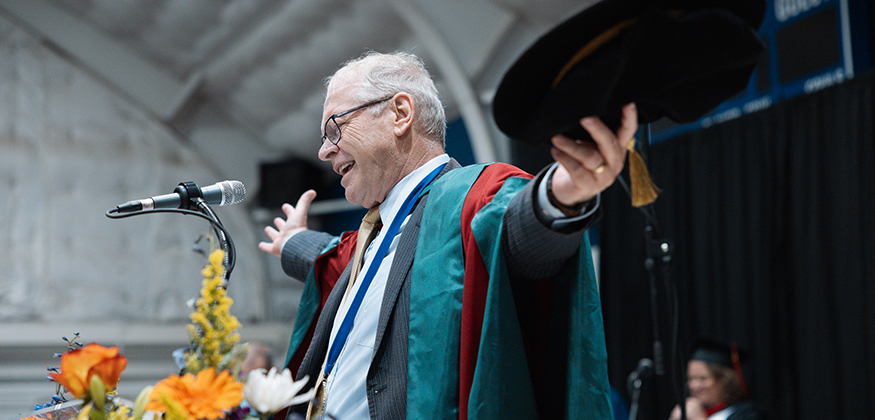
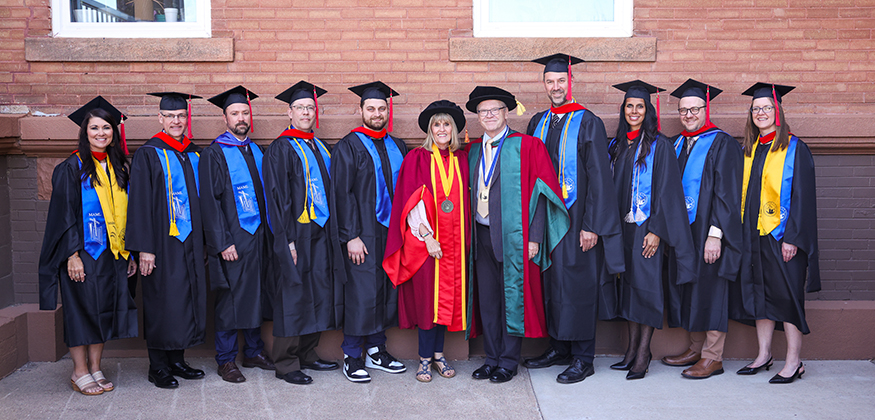
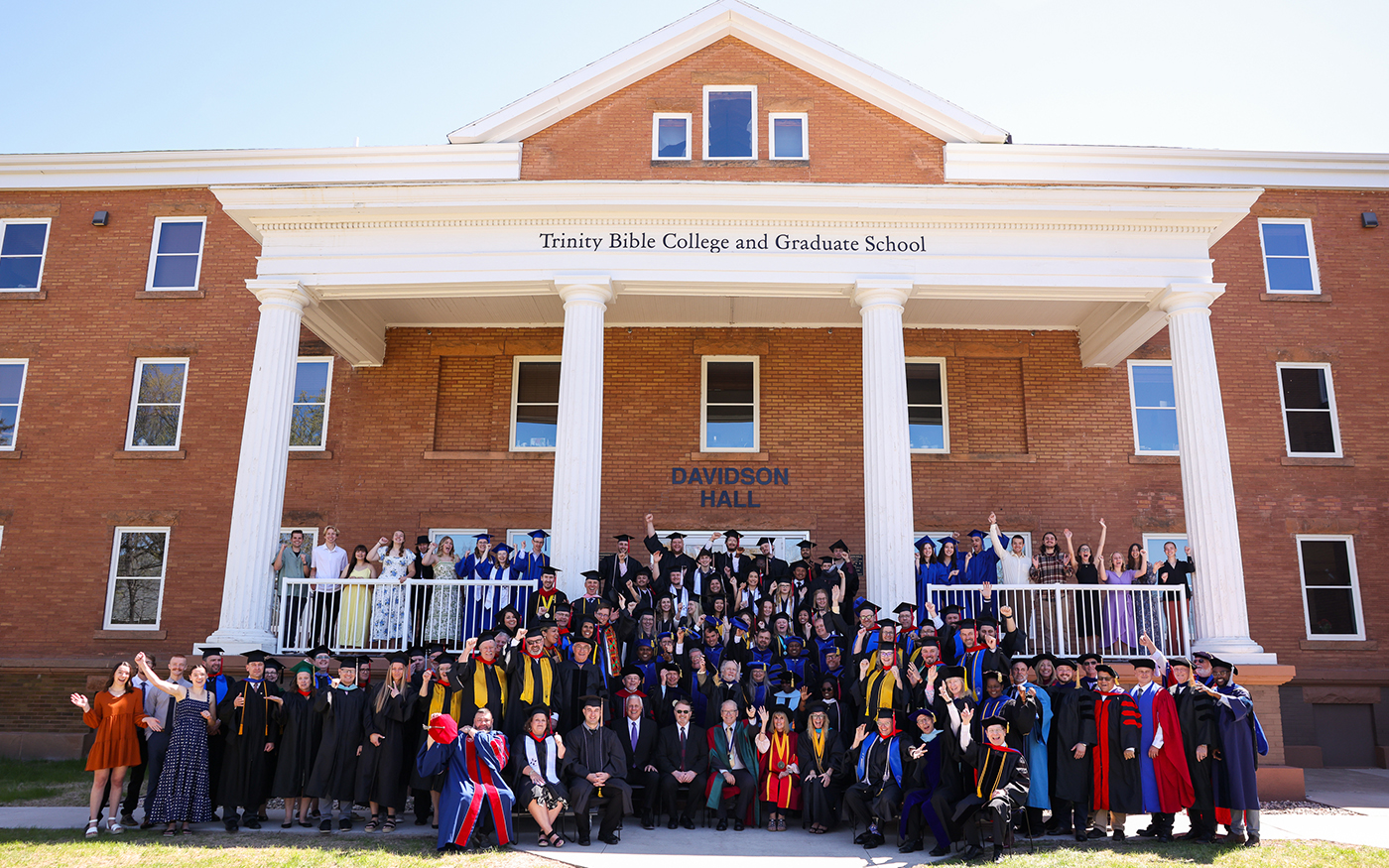
At the 2025 spring commencement ceremony, Trinity’s first cohort of nine Ph.D. candidates graduated, marking a historic moment for the entire state. This group not only graduated as the first doctoral-level students from Trinity, but they were also the first students to graduate with a Ph.D. in Theology in the state of North Dakota. “We were excited to witness such a moment,” says Alexander.
Also in attendance at Trinity’s spring commencement was General Superintendent Doug Clay, who says that it was a “delight to participate in the historic commencement at Trinity. The Assemblies of God family celebrates alongside Trinity’s leadership, partners, friends, and families.”
Yet what Alexander says is even more impressive than the successful Ph.D. program completions is the level of research produced by each candidate. “Their research was of the highest caliber, each producing a significant contribution to Pentecostal research,” he says.
Trinity’s newest graduate degree path is described by Alexander as a “European-style research based program” that is monitored by both internal supervisors and external professionals in each candidate’s field of study.
John Hailes, director of solution development and product advancement for the General Council of the Assemblies of God, was one of those graduates. He says that his experience was “exceptional,” set apart by the emphasis of field contribution instead of coursework, and the “intentional support structure that surrounds the dissertation process.” He added that one of the “greatest strengths of this model is the freedom to pursue a research topic that aligns closely with your passion, within the broader discipline of Practical Theology. The result is a deeply personalized and meaningful academic journey.”
As well as intense and individualized research components, the online degree program hosts two in-person residential intensives each year for faculty and peer evaluation. According to Hailes, these intensives enrich the program experience, providing “invaluable opportunities for peer review, interaction with the full Ph.D. faculty, and a deep sense of scholarly community.”
Now focusing on his role as pastor and product development specialist for AG leaders and national departments, Hailes says that during his time with Trinity, he was stretched intellectually, his theological insight was deepened, and he left the program equipped with tools that will shape and enhance his ministry and scholarly pursuits.
Trinity reports ongoing growth in its five Masters of Arts programs, as well as in its other post-graduate degree program, the Doctorate of Contextual Leadership. Trinity Graduate School also received Associate Membership status in June 2024 with the Association of Theological Schools, anticipating full membership and accreditation alongside 270 other graduate theology schools in the country within the next year.
Campus expansion is also seeing growth, most recently adding a new fine arts building. Yet despite the millions of dollars in campus development, Trinity remains entirely debt free.
Alexander, alongside Trinity’s faculty, share ongoing excitement about the future of the school and are grateful for the favor they have seen the Lord bestow on the school. They remain committed to Trinity’s mission of “training and educating people with theological reflection and missional passion in order that people and communities everywhere will hear the good news of Jesus and see His love demonstrated.”